
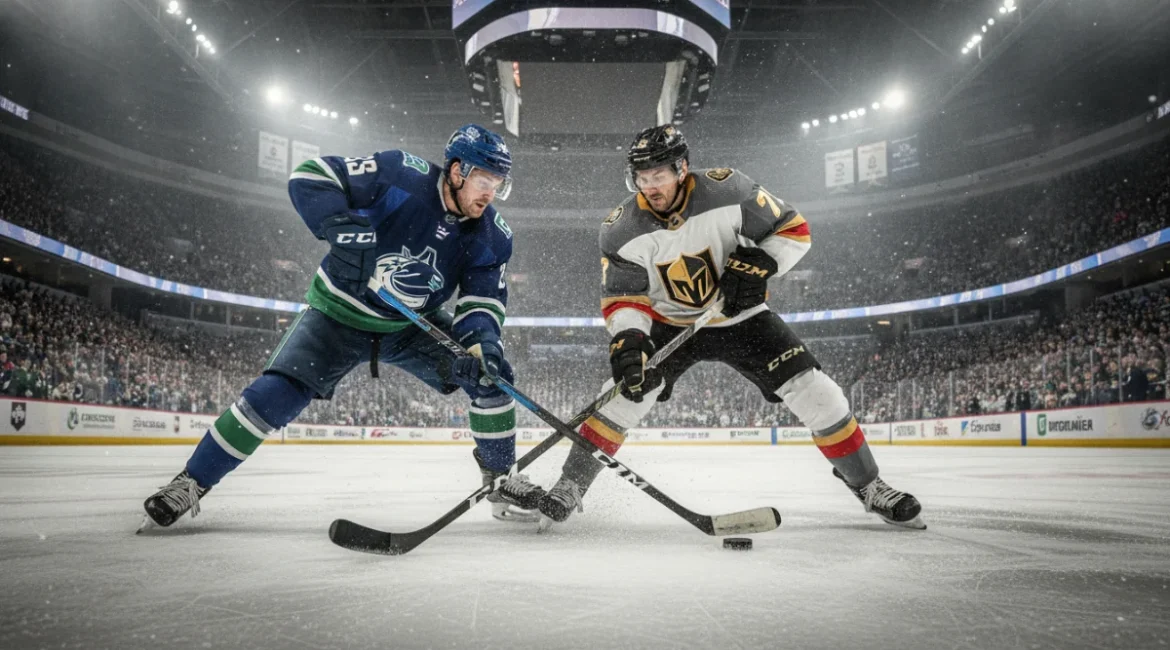
The Vancouver Canucks meet the Vegas Golden Knights on Sunday, October 4, at Rogers Arena in a matchup that arrives with an immediate scheduling edge for Vegas. Vancouver will be finishing the second half of a back-to-back after playing Calgary on Saturday, which raises the stakes for fatigue, lineup choices, and goaltending usage.
This game also closes out Vancouver’s first three-game homestand, so it carries early-season value beyond the standings. A strong result would help the Canucks build momentum before a difficult road stretch, while Vegas will try to exploit any signs of tired legs.
Game details and early-season context
| Detail | Information |
|---|---|
| Matchup | Vegas Golden Knights at Vancouver Canucks |
| Date | Sunday, October 4, 2026 |
| Puck drop | 6 p.m. PT / 9 p.m. ET |
| Venue | Rogers Arena, Vancouver |
| Vancouver’s schedule spot | Second game in two nights |
| Previous opponent | Calgary Flames on Saturday |
The timing makes this one of Vancouver’s most demanding early tests. A quick turnaround after a physical game can affect skating legs, defensive sharpness, and late-game execution, especially against a deep opponent.
That challenge becomes even more pronounced because the Canucks are still trying to define a new identity under head coach Manny Malhotra, who was hired for the 2026-27 season.
Why this matchup is such a difficult ask for Vancouver
Playing on consecutive nights is hard enough in any season, but it is even tougher when a team is still adjusting to new systems and new roles. Vancouver has to absorb the wear from Saturday, reset quickly, and avoid falling into an early hole.
If the Canucks spend too much of the first period defending, the rest of the night could become a grind. That would suit Vegas, a team built to push pace and force opponents into long shifts.
The Golden Knights arrive with a forward group that can attack from multiple lines, which means Vancouver cannot simply concentrate on one top unit. Even a well-played defensive game can unravel if tired skaters lose assignments or fail to clear rebounds.
The Canucks’ key names and what they must deliver
Elias Pettersson remains the most important offensive piece for Vancouver. His production has dipped over the last two seasons, but the Canucks still need him to drive possession, move the puck through the neutral zone, and create chances for his linemates.
Brock Boeser is another essential threat because his finishing ability can punish teams that allow even a small window. If Vancouver gets power-play chances or extended zone time, Boeser is one of the best bets to convert.
Jake DeBrusk brings a different kind of value near the crease. Against a structured Vegas defense, the Canucks may have to rely on rebounds, deflections, and traffic around the net rather than clean shooting lanes.
Vancouver’s goaltending situation is also a major storyline. Thatcher Demko is not available while recovering from hip surgery, which leaves the club without its usual starter and makes the crease assignment especially important on the second night of a back-to-back.
Vegas enters with depth, skill, and a familiar edge
The Golden Knights’ roster is built to make life difficult for a tired opponent. Jack Eichel, Mitch Marner, Mark Stone, Tomas Hertl, and William Karlsson give Vegas a blend of speed, playmaking, and scoring ability that can hurt teams in different ways.
Jack Eichel is the name Vancouver must track most closely. His combination of pace and shot generation makes him a dangerous power-play weapon and a constant threat when he enters the zone with control.
Mitch Marner adds another layer of pressure because he can create offense from almost any area in the attacking zone. If defenders overcommit to Eichel, Marner can find seams and open teammates.
That depth is exactly what makes Vegas such a tough matchup for a team playing on tired legs. The Golden Knights can keep rolling fresh forwards over the boards and keep pressure on Vancouver for long stretches.
What the Canucks must do to stay competitive
Vancouver’s best path is straightforward, even if it is not easy to execute. The Canucks need a stable start, disciplined penalty killing, and better puck support than they showed at times last season.
They also need to keep the game from turning into a track meet. Vegas is more comfortable in a fast, free-flowing contest, while Vancouver’s chances improve if the structure stays intact and the score remains manageable into the third period.
The absence of Quinn Hughes means the burden on Vancouver’s remaining defensemen is heavier than it used to be. Filip Hronek becomes a critical presence, and young defenseman Zeev Buium has a chance to play a larger role, including on the power play.
Moving the puck cleanly out of the defensive zone will matter more than ever. Against Vegas’ forecheck, hesitation can turn into turnovers, and turnovers can quickly become quality scoring chances.
What to watch when the puck drops
This game should reveal a lot about Vancouver’s early season direction. If the Canucks can keep their structure intact, protect their goalie, and generate enough offense from Pettersson, Boeser, and DeBrusk, they can make the night uncomfortable for Vegas.
If the Golden Knights control the pace, win the special-teams battle, and force long defensive shifts, Vancouver could be in trouble late. The back-to-back gives Vegas a built-in opportunity to press harder as the game wears on.
The most likely scoring names on the Vancouver side are Pettersson and Boeser, while Eichel, Marner, and Stone headline Vegas’ threat list. For the Canucks, the margin for error is small, but a disciplined effort would give them a real chance to hang around.
Sunday’s meeting at Rogers Arena is more than just an early-season game. It is a test of whether Vancouver can handle fatigue, respond to pressure, and hold up against one of the league’s deeper offensive groups.