
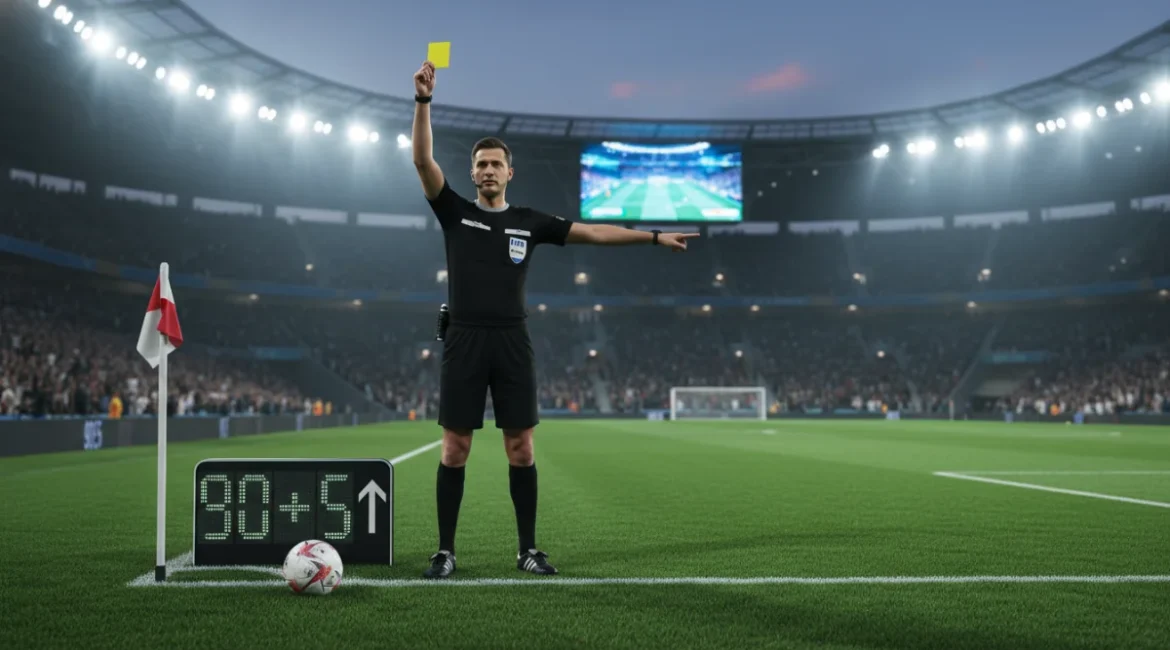
The 2026 World Cup is set to introduce a tighter, faster, and more closely policed version of the game. Several law changes are expected to affect how players behave, how referees manage stoppages, and how teams handle pressure in key moments.
Most of the updates are aimed at cutting delay, improving discipline, and giving officials clearer tools for difficult calls. That means matches may look familiar, but some of the biggest turning points could come from rules that were not part of the last World Cup cycle.
Why the tournament will feel different
Football’s lawmakers are trying to solve a simple problem: too much time is lost to delay, argument, and tactical interruption. The new measures target those issues directly, with a focus on faster restarts, stronger behavior control, and broader video review in select situations.
The World Cup will be one of the first major competitions where these ideas are likely to matter on a global stage. Coaches and players will need to adjust quickly, because small habits that were tolerated before may now bring immediate punishment.
Behavior that could now bring harsher punishment
One of the most notable updates concerns players who cover their mouths during confrontations. If a player hides speech with a hand, shirt, or arm in a heated exchange, the action may be treated as an attempt to conceal abusive or discriminatory language.
That does not mean every covered-mouth moment will lead to discipline. The rule is intended for confrontational or suspicious situations, not routine communication between players who are simply trying to avoid being read by cameras or nearby opponents.
The point of the change is clear: officials want a stronger response when behavior appears designed to hide misconduct. In practice, that gives referees a more direct way to address possible abuse before it escalates.
Walk-offs and protest tactics will carry real risk
Another major update is aimed at players or teams who leave the field in protest after a refereeing decision. A walk-off used as a form of protest may now result in a red card for the player involved, and team staff who encourage the action may also face sanctions.
If the protest leads to abandonment, the consequences could become even more serious. A match may be forfeited if a team is responsible for stopping play in this way.
This rule is meant to prevent teams from using public walk-offs as use during controversial moments. Referees and organizers want disputes handled through normal channels, not through disruption of the match itself.
Restart delays will be managed more aggressively
Time-wasting at throw-ins and goal kicks has long irritated fans, and the new restart rules are built to reduce that problem. Referees are expected to use a visible five-second countdown before certain restarts, giving the team in possession a short, clear window to resume play.
If the restart is not taken in time, the punishment depends on the situation. A delayed throw-in will go to the opposing team. A delayed goal kick may result in a corner kick for the other side, which is a much harsher swing in field position and pressure.
How the countdown changes the rhythm of a match
The new restart approach creates a simple choice: move quickly or lose the ball in a worse position. Late in a close game, that can matter more than ever, especially when a team is trying to protect a lead or break the opponent’s momentum.
Goalkeepers, defenders, and throw-in takers will need to be more organized. Slow preparation that once bought a few extra seconds may now cost possession or create a scoring chance for the opposition.
Substitutions will be faster and more controlled
Substitution procedures are also being tightened. When the board goes up, the departing player will have only 10 seconds to leave the field, and the exit must happen at the nearest boundary point rather than through a slow walk across the pitch.
In ordinary situations, that means less room for delay. If the player takes too long, the replacement may have to wait, leaving the team briefly short when play resumes.
Referees will still have discretion when there is an injury, a safety issue, or a security concern. Even so, routine slow exits are likely to become much harder to justify.
Medical stoppages will no longer be free tactical pauses
Another change targets players who receive treatment on the pitch. In most cases, an outfield player treated by medical staff will need to leave the field for one minute after play resumes.
The goal is to reduce the use of minor injuries as hidden time management. Teams that once treated every knock as a convenient pause may now think twice, because the player being treated could be required to step away from the action afterward.
There are important exceptions. Goalkeeper injuries, collisions involving a goalkeeper, teammate-to-teammate collisions, serious injuries such as possible head trauma, and a player about to take a penalty are among the situations where the rule should not apply.
| Situation | Likely effect | Why it matters |
|---|---|---|
| Slow throw-in | Possession to the opponent | Reduces deliberate delay |
| Slow goal kick | Corner kick to the opponent | Adds stronger punishment for stalling |
| Delayed substitution | Replacement may wait | Keeps teams from wasting time |
| Minor treatment break | Player may have to leave for one minute | Lowers tactical use of medical stoppages |
| Confrontation with mouth covered | Possible red card | Targets concealed abusive conduct |
VAR will be used in more situations
Video review is also set to gain a wider role. VAR has been part of World Cup play since 2018, but the 2026 tournament is expected to allow intervention in a few additional situations that were previously harder to correct.
One important area is the second yellow card. If a player is sent off because of a second booking and the decision is clearly wrong, VAR may be able to step in. That is a significant change because second-yellow incidents have often sat outside the normal review process.
Mistaken identity is another review area. If the referee books or dismisses the wrong player, VAR can help correct the record before the error changes the match unfairly.
Set-piece errors may also be reviewed
Some wrongly awarded corner kicks may be reviewable if the mistake is obvious and can be fixed quickly. The intent is not to review every marginal call, but to catch clear errors without causing long stoppages.
There is also added attention on fouls before a free kick or corner is taken. If an attacking player commits an offense before the ball is live, VAR may recommend an on-field review so the referee can apply the correct discipline and reset the restart properly.
Heat, hydration, and match control
The 2026 tournament will be staged across the United States, Mexico, and Canada, so heat management is part of the planning from the start. Every match is expected to include hydration breaks, with a three-minute pause in each half.
The break is likely to come around the midpoint of each half, though the referee will keep some flexibility. If treatment is already needed near that time, the referee may use the same stoppage for hydration rather than create an extra interruption.
That should help protect players while keeping the match flow as organized as possible. It also gives officials a clearer structure for dealing with extreme conditions.
What teams will need to change first
Coaches will probably spend the most time preparing players for four areas: discipline, restarts, substitutions, and medical stoppages. Those are the places where the new laws can create immediate consequences.
The lesson is simple. A slow goal kick can become a corner. A confrontation that once ended in words can now lead to a red card. A routine substitution can drag on long enough to disrupt the team’s shape.
- Players will need to speak carefully in tense moments, especially around officials and opponents.
- Teams will need cleaner restart habits so they do not surrender possession through delay.
- Substitutions will need to be efficient and planned in advance.
- Set-piece routines will need more discipline because VAR can now catch some pre-kick fouls.
What fans should expect to notice on matchday
Supporters may see referees using their hands more often to count down restarts, and they may notice less patience for slow movement during substitutions. Medical delays will also feel different if players are required to leave the pitch after treatment.
In some matches, VAR may intervene in ways that would have been unusual in past tournaments. That may take time for viewers to get used to, but the overall aim is straightforward: fewer delays, fewer loopholes, and more accountability.
For fans, that means the pace of the game could feel sharper and the consequences of small mistakes could become much larger. The 2026 World Cup may still be decided by stars and tactics, but it could also be shaped by how well teams adapt to these new rules.