
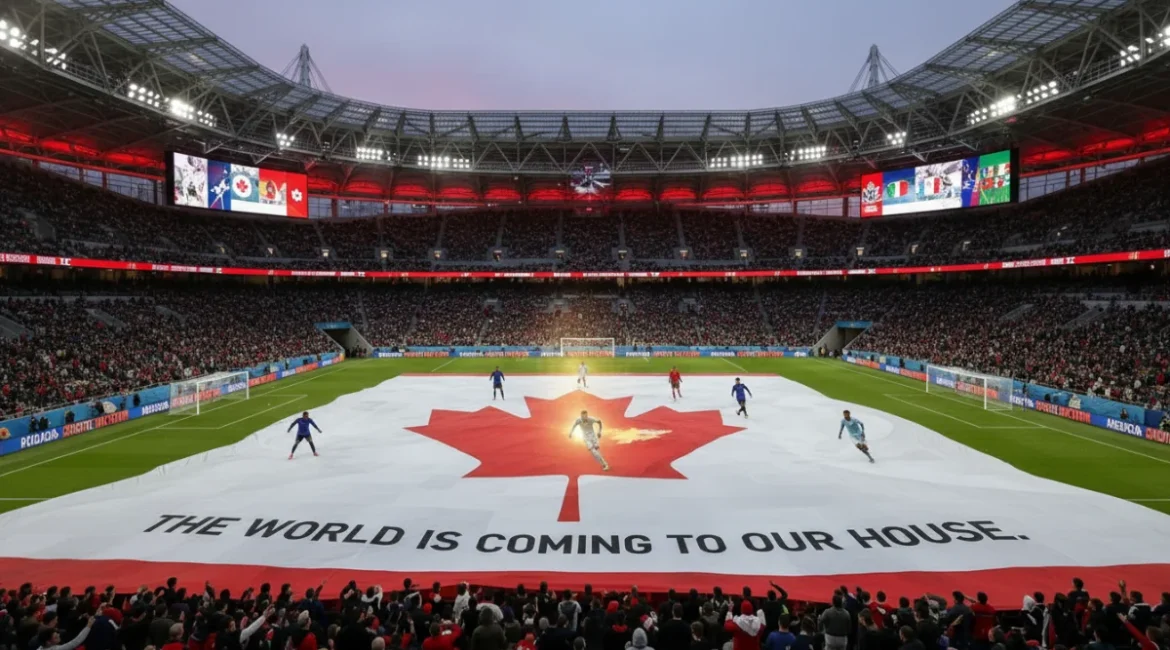
The 2026 FIFA World Cup will bring the game’s biggest stage to Canada, Mexico, and the United States, and the field is loaded with teams that can win it all. With more matches, more travel, and more pressure, the title race should be as unpredictable as it is intense.
For Canadian fans, the stakes feel personal. Home support will be loud in Toronto and Vancouver, and while Canada will dream of a deep run, the spotlight will still fall first on the teams most likely to lift the trophy.
The Short List
The table below gives a quick snapshot of the ten strongest contenders, based on squad depth, recent tournament pedigree, and the kind of talent that decides knockout games.
| Rank | Team | Why They Stand Out |
|---|---|---|
| 1 | France | Elite depth, speed, and big-match experience |
| 2 | Brazil | Explosive attack with growing defensive balance |
| 3 | England | Midfield control and proven attacking talent |
| 4 | Argentina | World champions with winning habits and chemistry |
| 5 | Spain | Youth, technique, and a sharper attacking edge |
| 6 | Germany | Structure, discipline, and renewed competitive form |
| 7 | Portugal | Creative firepower and strong roster balance |
| 8 | Italy | Tournament craft and defensive organization |
| 9 | Netherlands | Defensive quality and tactical flexibility |
| 10 | Uruguay | High energy, pressure, and front-line intensity |
Why France Starts at the Top
France remains the most complete team on paper. The squad combines proven leaders, match-winners in every line, and a pace advantage that can overwhelm opponents in open space. Kylian Mbappé gives them the kind of threat that changes game plans before kickoff.
What separates France from the rest is not just star power. It is the ability to replace one elite player with another without losing much quality. In a tournament this long, that kind of depth matters as much as any single name.
Who Can Break Through
Brazil stays near the top because its attack can turn ordinary games into chaos for opponents. England brings one of the most balanced cores in the competition, with Jude Bellingham driving the midfield and Harry Kane providing the final touch. Argentina enters as the defending champion and still plays with the calm of a team that knows exactly how to survive pressure.
Spain, Germany, and Portugal sit just behind that top group, but all three have a real path to the final. Spain’s young wide players add directness, Germany’s structure gives them a high floor, and Portugal’s attacking variety makes them dangerous in any knockout bracket.
Teams Built for Tournament Football
- Italy is dangerous because it understands how to slow games down, stay compact, and punish mistakes.
- The Netherlands can frustrate almost anyone when its defense is locked in and its shape stays disciplined.
- Uruguay brings relentless pressure and enough edge to make every opponent uncomfortable from the first whistle.
These teams may not all generate the same hype as France or Brazil, but tournament history rewards sides that can stay organized, manage emotion, and finish chances when it matters most. That is especially true in a World Cup with more rounds and more physical demands.
Can Canada Use the Crowd?
Canada will not enter as a favorite, but home support can still shift a match. Alphonso Davies gives the team a genuine game-breaking outlet, and a loud crowd can make life difficult for any opponent that underestimates the environment in Toronto or Vancouver.
The road to the trophy is still likely to run through one of the giants, but that is what makes the 2026 tournament compelling. The favorites are clear, the margins are thin, and the host nations will get their chance to make the entire bracket uncomfortable.