
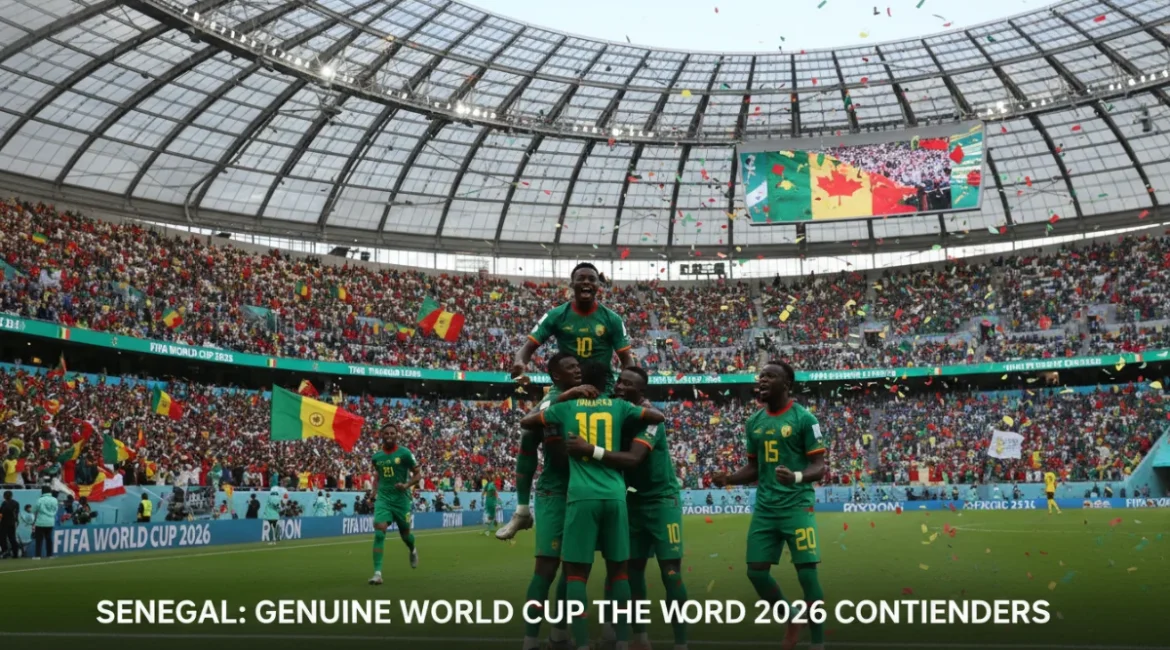
By the time the 2026 FIFA World Cup begins, Senegal will not be arriving as a sentimental story or a team content with simply surviving the group stage. The Lions of Teranga are approaching the tournament with the confidence of a side that believes a title chase is realistic, and coach Pape Thiaw has said as much in unusually direct terms. His warning was blunt: if he ever stopped believing Senegal could win the World Cup, he would walk away from the job.
That level of ambition is one reason Senegal draws so much attention from analysts, supporters, and bettors who are searching for a genuine outsider with upside. The conversation around the Senegal World Cup 2026 prospects is no longer built on wishful thinking alone. It is shaped by a squad that blends veteran quality, tactical maturity, and a growing pipeline of elite youth talent, making the team one of the more credible long-shot candidates in the field. Canadians who want to back that view can bet on Senegal for the World Cup on Rexbet Canada, where the appeal lies in both the roster’s ceiling and the market value attached to it.

Still, the same system that has produced Senegal’s modern footballing success carries a serious contradiction. The national team has benefited enormously from a development model that exports talent at a premium, but the domestic game often receives only a fraction of the value that talent generates. In practical terms, Senegal has become a factory for excellence without always capturing the full economic return on that excellence.
The Academy Model That Built the National Team
Senegal’s rise is rooted in a compact but highly efficient network of academies that identify children early, train them professionally, and prepare them for international football. Institutions such as Generation Foot, Diambars, and Dakar Sacre Coeur have become recognizable names well beyond West Africa because they consistently produce players who are ready for Europe’s top leagues. Their work is not limited to football alone; education, nutrition, and medical support are built into the system, which is one reason these academies have earned such a strong reputation.
The model is effective, but it is also lopsided. European clubs often enter into long-standing partnerships with local academies, securing first access to the best prospects while providing funding and technical support in return. FC Metz’s relationship with Generation Foot is the best-known example. That arrangement helped launch the careers of Sadio Mane, Ismaila Sarr, and Pape Matar Sarr, but it also illustrates how much negotiating power remains outside Senegal once a player’s potential becomes obvious.
The financial gap is striking. In one recent comparison, 13 academy-developed players selected for Senegal’s continental squads produced only about €100,000 in initial transfer income for their local academies, even though the same players were later sold on by European clubs for a combined €81.2 million. Across their careers, those 13 players have generated more than €411 million in transfer fees. The numbers show why Senegal’s football success is celebrated abroad and scrutinized at home.
| Category | Approximate Value |
|---|---|
| Initial income to local academies | €100,000 |
| Later resale value at European clubs | €81.2 million |
| Total career transfer fees generated | More than €411 million |
That imbalance does not only affect accountants. It affects the entire football ecosystem. Local clubs struggle to modernize facilities, domestic stadiums remain underdeveloped, and the national league receives far less attention than the export market. Even when solidarity payments are due under FIFA rules, administrative mistakes and bureaucratic delays can leave smaller clubs fighting to recover money that should already belong to them.
A Team Built on Two Pipelines
Senegal’s current strength comes from a dual strategy. One pipeline is domestic, driven by academies that develop raw talent into polished professionals. The other is the diaspora, where the federation has become increasingly effective at convincing players with Senegalese heritage to commit to the national team before they are fully locked in elsewhere.
This second route has become especially important in recent years. Rather than waiting to lose prospects to other federations, Senegal now identifies promising dual nationals in Europe at an early age and builds relationships before the competition hardens. The appeal is emotional and competitive at the same time: players are offered the chance to represent family heritage while joining a national project that now feels ambitious rather than experimental.
- First, the federation tracks high-level dual nationals in France, England, and other major European talent pools before senior commitments are made.
- Second, it uses family ties, cultural identity, and competitive momentum to make Senegal feel like a natural destination rather than a fallback choice.
- Third, it integrates those recruits into a squad that already contains proven international performers, which makes the transition smoother and the project more persuasive.
Recent examples include Ibrahim Mbaye of PSG and Mamadou Sarr of Chelsea, both of whom had previously represented France at youth level before aligning with Senegal. Their arrival reflects a broader shift in how the federation operates: Senegal is no longer merely responding to the global talent market, but actively shaping it.
Why 2026 Feels Different
The 2026 World Cup may be the most important tournament of this generation for Senegal’s senior stars. Sadio Mane, Kalidou Koulibaly, and Edouard Mendy all remain central figures in the national setup, but time is no longer on their side. For them, this is more than another qualification campaign. It is a final opportunity to turn years of continental consistency into a result that changes how Senegal is viewed on the world stage.
The squad’s makeup also gives Senegal unusual flexibility. Veterans such as Idrissa Gana Gueye can anchor the team while younger players bring speed, energy, and a different kind of technical quality. That balance matters in a tournament that often rewards sides capable of switching between control and chaos without losing shape. Senegal has enough experience to stay organized and enough youth to make opponents uncomfortable.
The group stage will be demanding, starting with France in New Jersey before further tests against Norway and Iraq in Group I. France, in particular, will reveal a great deal about Senegal’s ceiling. If Senegal can match the pace and precision of one of the world’s strongest teams, the rest of the bracket will have to take notice. If not, the tournament will still show how far the program has come, even if the next step remains unfinished.
Senegal’s football story is therefore both inspiring and unresolved. The nation has created a pathway to elite performance that many countries would envy, yet the economic rewards of that success still flow unevenly. What happens in 2026 could define not only whether the team makes history, but also how loudly the sport’s larger structural questions are heard.